


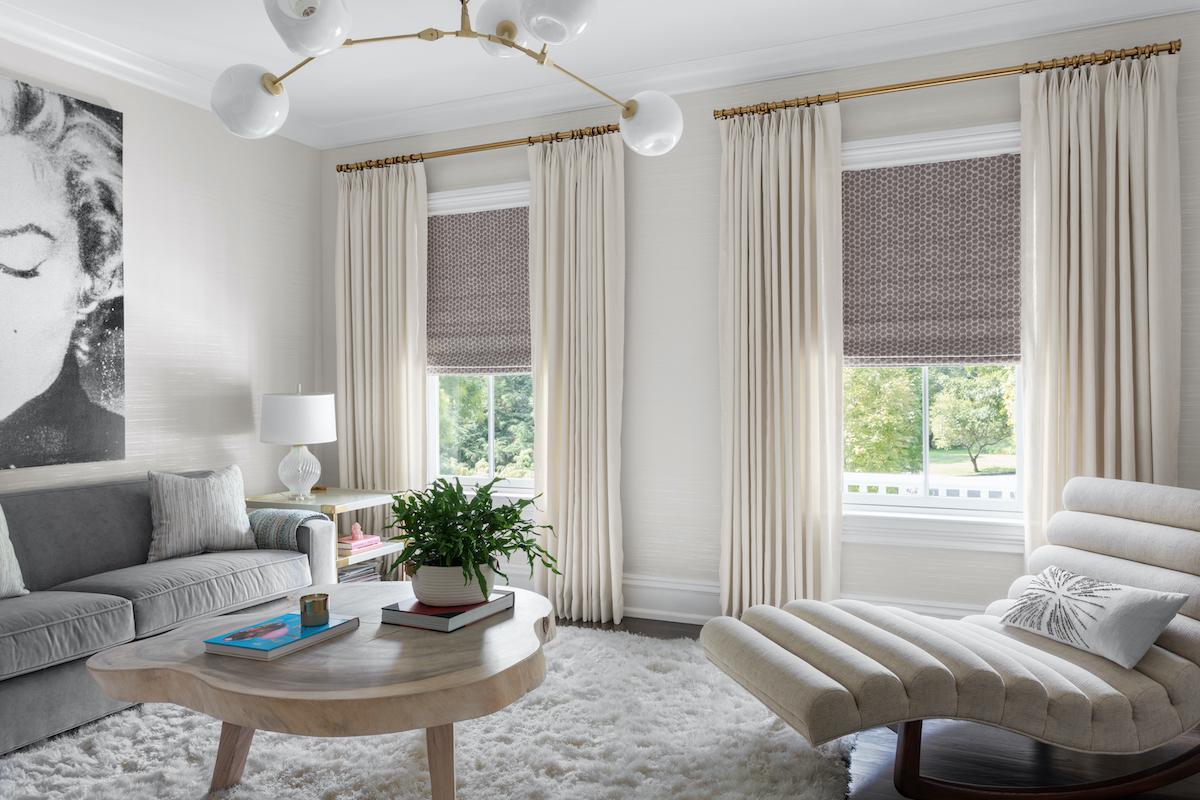
Layering curtains with roman shades is one of the most versatile and timeless window treatment combinations. It blends structure and softness, giving you both functional light control and an elevated, designer look.
Roman shades provide tailored coverage, while curtains add movement, height, and visual warmth. Together, they create depth that a single treatment simply can’t achieve.
Why This Combination Works
Custom roman shades sit neatly within or just above the window frame, offering precise light control and privacy. Curtains, mounted wider and higher, frame the window and soften the room’s architectural lines.
The contrast between the structured folds of a roman shade and the fluid drape of curtains creates balance. It feels layered but not cluttered.
Start With the Right Roman Shade Style
Not all Roman shades create the same effect.
- Flat Roman shades offer a clean, modern look with minimal bulk.
- Relaxed Roman shades have a gentle curve at the bottom, adding softness.
- Pleated or classic styles create more traditional structure.
In contemporary homes, flat styles often pair best with simple curtain panels. In transitional or traditional spaces, or cottagecore decor homes, relaxed styles complement textured drapery beautifully.
Choose Complementary Fabrics
Fabric coordination is key to successful layering.
If your roman shade features pattern, keep curtains solid and understated. If the shade is neutral and textured (like linen), curtains can introduce subtle pattern or a deeper tone.
Tone-on-tone combinations — such as ivory shades with warm beige curtains — create depth without overwhelming the space.
Avoid heavy fabrics for both layers. If the shade is thick or lined, opt for lighter curtain panels to maintain balance.
Hang Curtains High and Wide
To maximise visual impact, mount curtain rods several inches above the window frame — or closer to the ceiling — and extend them beyond the window width.
This allows curtains to stack neatly at the sides when open, keeping the roman shade fully visible and maximising natural light.
This technique also makes ceilings appear taller and windows feel larger.
Consider Function First
Think about how you use the room.
In bedrooms, pair blackout-lined roman shades with decorative custom curtains for added insulation and softness.
In living rooms, light-filtering shades allow daylight to pass through while curtains add elegance in the evening when closed.
Each layer should serve a clear purpose.
Coordinate Hardware and Mounting
If your roman shade is inside-mounted, curtains should be outside-mounted to avoid crowding the window.
Double rods are typically unnecessary since roman shades operate independently. A single rod installed above the shade usually works best.
Choose hardware finishes that complement your room’s overall aesthetic — matte black for modern interiors, brushed brass for warmer, transitional spaces.
Keep Proportions Balanced
Curtains should be full enough to look luxurious when closed but not so heavy that they overpower the tailored look of the roman shade.
Panels that gently skim the floor create a refined finish. Excess pooling can compete with the clean lines of the shade unless the design style calls for drama.
Final Thoughts
Layering curtains with roman shades creates a harmonious blend of structure and softness. When fabrics, proportions, and mounting are carefully considered, this pairing enhances both comfort and visual appeal.
It’s a flexible, elegant solution that works in living rooms, bedrooms, dining spaces, and even home offices — offering beauty and practicality in equal measure.


